Each state in the U.S. has its own set of foreclosure laws, but they all share common elements that students need to understand. These laws play a significant role in balancing the interests of the lender and protecting homeowners’ rights.
An essential aspect of foreclosure law is understanding the difference between judicial and non-judicial foreclosures. Judicial foreclosures involve court proceedings, where the lender files a lawsuit to foreclose. In contrast, non-judicial foreclosures occur outside the courtroom based on a clause in the mortgage or deed of trust. Law students must study these differences to predict how foreclosures will proceed in different jurisdictions. Understanding these processes is crucial for anticipating the legal strategies and remedies involved.
Foreclosure law also involves comprehending the rights of the borrower during the foreclosure process. Borrowers have certain protections under federal and state laws, which lawyers must advocate for during legal proceedings. For example, the Fair Debt Collection Practices Act and the Homeowner Bill of Rights offer various protections to borrowers during the foreclosure process. These rights are enforced to ensure fairness and prevent wrongful foreclosures. Thus, proficiency in foreclosure law equips future lawyers to defend homeowner rights adeptly.
Stages of the Foreclosure Process
The foreclosure process typically progresses through several stages. Initially, the borrower receives a notice of default after missing mortgage payments. This stage is a critical period where the borrower can rectify the situation by paying the overdue amount and halting the foreclosure process. If the borrower does not respond, the lender proceeds with the next step, issuing a notice of sale indicating the property’s auction. Each stage of this process is governed under varying regulations depending on local foreclosure laws, thus making it crucial for law students to familiarize themselves with these stages.
Following the notice of sale, the foreclosure process may culminate in the auction of the property. This auction can occur at the courthouse or through a private selling event, depending on whether it’s a judicial or non-judicial foreclosure. Sold to the highest bidder, the property might go back to the lender if no acceptable bids are made. Law students must consider the implications of these sales, including determining if there are any legal grounds to challenge them. Understanding the nuances of each foreclosure stage enables students to effectively analyze the various outcomes.
Finally, if the property is sold, it moves into the post-foreclosure stage, impacting both borrowers and lenders. For the borrower, this can mean facing eviction if remaining in the property or dealing with credit score repercussions. For the lender, it involves the challenges of selling or managing the property. Understanding the legal responsibilities and rights at this stage is crucial for law students. It is essential to learn how to handle disputes and enforce post-foreclosure rights effectively through legal channels.
The Role of Legal Professionals in Foreclosure Situations
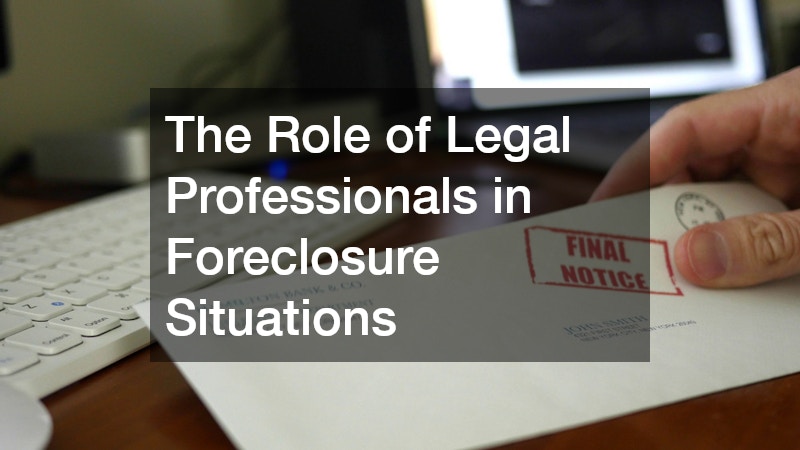
Legal professionals play a pivotal role in navigating foreclosure situations. Their expertise ensures compliance with foreclosure law while safeguarding the interests of their clients, whether lenders or borrowers. Lawyers must provide advice and strategies on negotiation, litigation, and settlements. During these trying times, effective legal intervention can help mitigate the consequences many homeowners face. Understanding the role of legal professionals in these scenarios is indispensable for students pursuing law.
In foreclosure law, attorneys must also actively work to protect homeowner rights against potential abuses. The complexity of foreclosure law demands that legal professionals be well-versed in both state and federal laws. Employing comprehensive legal knowledge, attorneys advocate for client interests throughout the foreclosure process. Law students should learn the significance of staying updated with legal precedents and changes in foreclosure legislation. Such diligence ensures that they can provide sound legal counsel to affected homeowners and lenders.
Besides representing clients in litigation, lawyers also assist in navigating alternatives to foreclosure. Options such as loan modifications, short sales, and deeds in lieu of foreclosure allow lawyers to offer solutions that could prevent a foreclosure altogether. Students need to understand how these alternatives can be negotiated effectively. By studying these legal strategies, law students can offer more comprehensive advice to clients in real-world situations. Therefore, an in-depth knowledge of foreclosure law and related alternatives is essential for aspiring legal professionals.